Membership · 4 min read
How to track volunteer firefighter hours, and why the number matters
Ross Shaffer and the Firehouse Desk team · November 2026

The short version
Hours are the one number that shows what a volunteer company gives its community. Record them once, where the work happens, and use the total for budget requests, grant applications and recognition.
What an hour is worth
Independent Sector and the University of Maryland’s Do Good Institute publish a national value for an hour of volunteer time. The April 2026 figure is $36.14.
The University of Tennessee’s municipal advisory service uses a simple example. A department answers 500 calls a year, averages 10 volunteers on each, and each call lasts about an hour. That is 5,000 hours. At $36.14, it comes to about $180,700 a year in labor the town does not pay for. And that counts calls only.
What to record
Calls are the obvious part. Training nights, duty shifts and standbys, meetings, fundraising and work around the station add up to more than most officers expect.
Scheduled shifts are worth separating out. The same Tennessee guidance notes that volunteers who staff the station on scheduled shifts earn the same credit as paid firefighters under the insurance rating schedule.
Where it usually breaks
A sign-in sheet at the station. Someone types it into a spreadsheet. Someone else types it again for the county, and a third time for the annual report. Every retyping loses hours and costs an evening.
The fix is to record an hour once, as close to the work as possible, and let every report draw from that one record.
What to do with the number
Budget season. “Our members gave 9,000 hours last year” is a stronger opening than a request for money.
Grants. FEMA’s recruitment and retention grants ask you to describe the problem you are solving. Hours by member and by month show it.
Recognition. The National Volunteer Fire Council’s retention research found that nearly half of volunteers have thought about leaving, and recognition is one of the steps it recommends. You cannot thank people accurately for work you did not count.
Make it easy to record
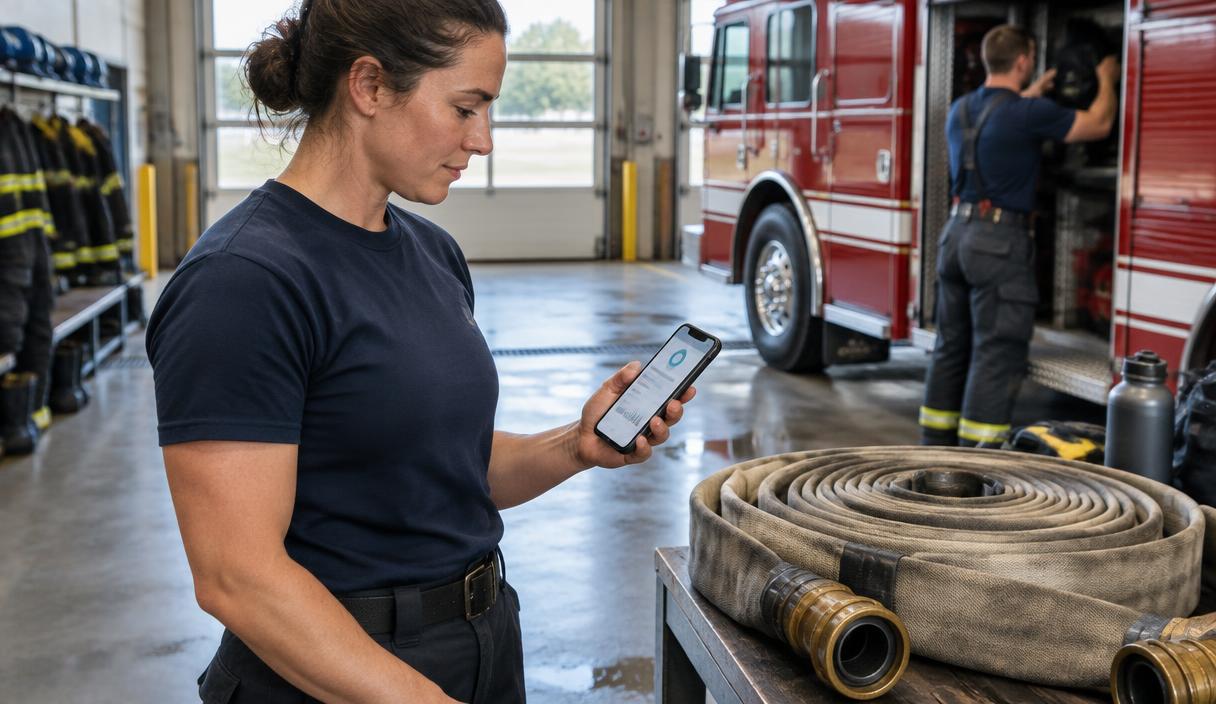
Hours get lost when recording them is a chore. The closer the record is to the work, the better it holds up: a member logs the drill on a phone before leaving the station, and an officer approves it that week. Waiting until the end of the month means someone is guessing.
Agree on what counts before you start. Does travel to a training count? Does standby at a parade? Write the rule once and apply it to everyone. A total is only useful if the people reading it trust how it was built.
Look at it every month
A monthly total by member shows things an annual total hides: who is carrying the load, who has gone quiet, and which probationary members are falling behind. An officer who notices in March can have a conversation. An officer who notices in December is reading a resignation.
Five kinds of hours worth separating
One total hides more than it shows. Keep five separate counts, because each answers a different question.
Calls. Time on incidents. This is the number the public thinks of first, and usually the smallest share of what members give.
Training. Drill nights, classes and online modules. This is the number that shows a company is keeping its skills up.
Duty and standby. Scheduled shifts at the station and standbys at events. It shows coverage, and it is the hardest to reconstruct afterward.
Running the company. Meetings, committees, record keeping and maintenance. Someone does this work, and it is almost never counted.
Fundraising and community. Dinners, raffles, open houses, school visits. For many companies this is what pays for the truck.
Service awards and benefits depend on it
Many states and counties run length-of-service award programs or other benefits for volunteers, and most tie them to points or hours earned in a year. When the record is thin, the argument comes in January: a member is sure they qualified, the sheet says they did not, and nobody can prove it either way. A record kept as the year goes, which members can see for themselves, ends that argument before it starts.
Reporting up
The town board, the county and your own members all want the same thing from a volunteer company once a year: a clear picture on one page. Total hours by kind. The value of those hours at the national rate. Calls answered. Members on the roster, and how many joined and left. Put last year beside it. A company that brings that page to a budget hearing is treated differently from one that brings a request.
Common mistakes
Counting calls only, which undersells the company by half or more. Letting each officer decide what an hour is, so two crews’ totals cannot be compared. Rebuilding the year from memory in December. And keeping the totals in the secretary’s binder, where members never see them. People who can see their own hours add up tend to keep them up.
Quick answers
What counts as a volunteer hour? Whatever your department writes down as counting, applied the same way to everyone. Most count calls, training, scheduled duty and work for the company. Decide about travel and standby, and put it in writing.
How do we put a dollar value on hours? Multiply the total by the national value of volunteer time, which is $36.14 an hour in the April 2026 release. Say where the figure comes from when you use it.
Should members see their own hours? Yes. It catches mistakes early, and it lets a member see how close they are to a requirement while there is still time to meet it.
Sources
More from The Size-Up