Retention · 4 min read
Volunteer firefighter retention: why members leave, and what officers can change
Ross Shaffer and the Firehouse Desk team · November 2026
The short version
The National Volunteer Fire Council’s research found that nearly half of current volunteers have considered leaving, and that former volunteers point to cliques and unsupportive leadership more than to the time commitment. Those are things officers can change. Start by measuring retention, asking people why they stay, and asking the ones who leave why they left.
What the research says
In 2020 the National Volunteer Fire Council surveyed more than 1,000 leaders, current volunteers and former volunteers. Over two thirds said their department has, or has had, a retention problem. Forty-seven percent of current volunteers said they had considered leaving.
The reasons are the uncomfortable part. Former volunteers named a lack of cohesion in the department and leadership that did not support them as the main reasons they left. Cliques came up again and again. Members who thought about leaving but stayed were bothered by the same things, and stayed anyway because they wanted to serve.
The report also found that most leaders could not say how their department defines retention, or how it measures it.
Why this is good news
A department cannot change how many hours there are in a week, or how far people commute. It can change how a new member is treated in the first months, whether anyone notices when a member stops showing up, and whether leadership asks before it assumes. The causes the research points to sit inside the firehouse.
Four things to do this year
Measure it. Pick a definition and write it down. How many members were active a year ago, and how many of those are active now? Do the same for people who joined in the last two years, because that is where most losses happen.
Give every new member a mentor. One named person who answers questions and notices absences. The NVFC lists mentorship first among the steps it is building tools for.
Ask before they leave. A stay interview is a short conversation with a member who is doing fine: what keeps you here, and what would make you leave? Former volunteers in the survey said exit interviews were the step most likely to help, because they give leadership a chance to hear the problem at all.
Recognize the work accurately. Thank people for what they did, with the numbers. Hours, calls and training are easy to count if they are recorded as they happen.
The quiet warning signs
Members rarely quit in one day. Their hours fall first. They miss two drills, then a meeting. If the only place that shows up is a sign-in sheet in a binder, nobody sees it until the gear comes back. A roster that shows each member’s activity by month gives an officer the chance to pick up the phone while it still matters.
What a new member needs in the first months
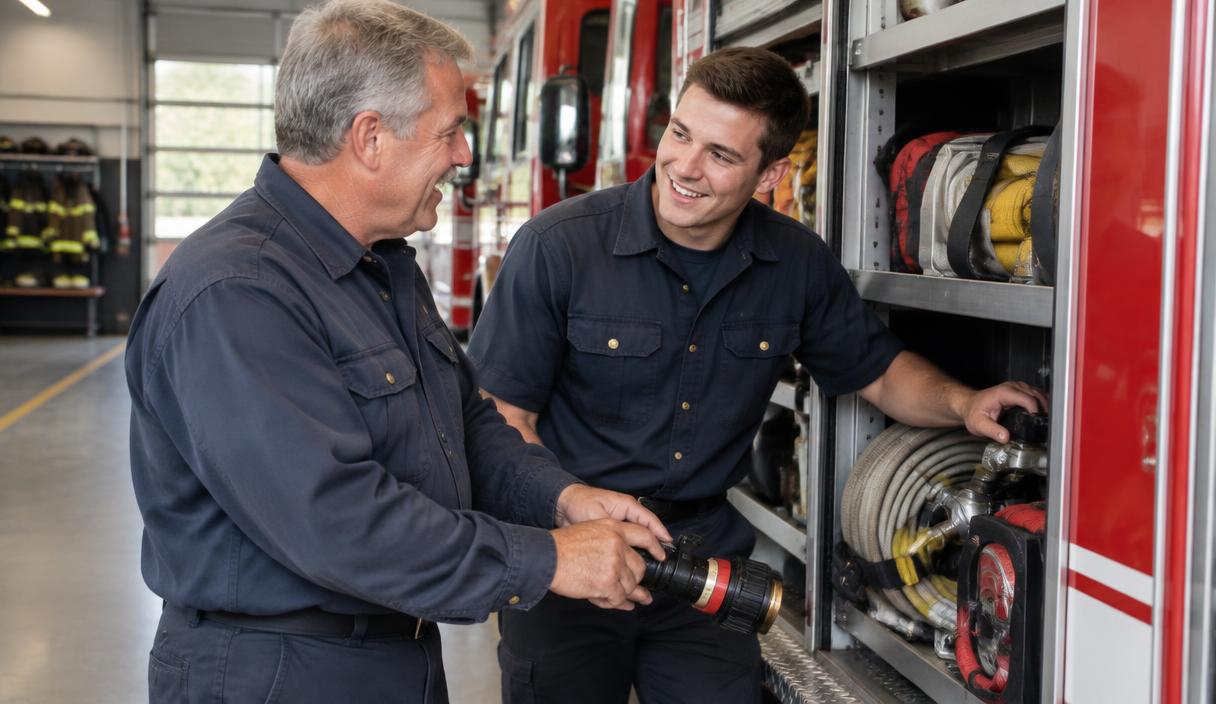
People decide early whether they belong. A new member needs a few plain things: a name to call, a schedule they can read, gear that fits, and something to do on the first night that is not standing by the wall. They need someone to sit with at the first meeting. None of that costs money. All of it tells them whether the company was expecting them.
Give every new member a first assignment within two weeks, even a small one. Checking a compartment with a senior member teaches the truck and starts a relationship in the same hour.
Cliques are a leadership problem
The research is blunt about this. Former volunteers named cliques and unsupportive leadership ahead of everything else. Every firehouse has close groups, and that is part of why people stay. It becomes a problem when the same few people get the good assignments, the inside information and the benefit of the doubt.
Officers can change that with small habits. Mix crews at drills instead of letting people pair off. Rotate who drives, who leads and who cleans. Sit with the newest members at the meal. Watch who speaks at meetings and who never does. When someone is shut out or ridden too hard, deal with it that week, in private, and deal with it the same way no matter who is doing it.
Flexibility without lowering the standard
The same research found that flexibility in training requirements and schedules matters to volunteers. That does not mean asking less. It means giving people more than one way to meet the same bar: a make-up drill for the one they missed, online modules where your state allows them, and a clear list of what is required this year so nobody is surprised in November.
It also helps to have a place for people whose lives change. A member with a new baby or a new job may not be able to ride for a year. A leave of absence, or a support role, keeps them on the roster and in the family. A resignation usually does not get undone.
How to run a stay interview
It takes fifteen minutes and a cup of coffee. Ask four questions. What do you like about being here? What would you change? What almost made you quit? What would make you stay another five years? Write the answers down. Then act on one thing and tell the member you did. The conversation only works if something comes of it.
Quick answers
Why do volunteer firefighters quit? In the National Volunteer Fire Council’s research, former volunteers pointed first to a lack of cohesion and to leadership that did not support them. Time pressure matters, but it was not the top reason.
What is a good retention rate? There is no single benchmark in that research, and most leaders surveyed did not have a definition at all. Start by measuring your own and compare it with last year.
What is the cheapest thing to try first? Ask. Stay interviews and exit interviews cost nothing, and former volunteers rated exit interviews as the step most likely to help.
Sources
More from The Size-Up