Counties · 4 min read
County-wide volunteer firefighter recruitment: one front door for every company
Ross Shaffer and the Firehouse Desk team · November 2026

The short version
A resident who wants to volunteer does not know which company covers their street. A county can give them one place to apply and one consistent process, while each company still interviews, votes and sets its own requirements. Start with one or two companies, agree on what is shared, and add the rest one at a time.
The problem a county can see
From the county office, recruitment looks like a dozen separate efforts with a dozen different forms. Some companies answer in two days and some in two months. Nobody can say how many residents tried to volunteer last year, or how many gave up. The companies are not doing anything wrong. Each one is solving the same problem alone, in its spare time.
What to share, and what to leave alone
Volunteer companies guard their independence, and they are right to. A county-wide approach works when it shares the paperwork and leaves the decisions where they are.
Share: the application, the screening steps the county already pays for, and the list of who applied and where they stand. Anne Arundel County in Maryland, for example, tells recruits that the drug test, physical and fingerprint check are provided at no cost to the new member.
Leave with each company: the interview, the membership vote, probation requirements and bylaws.
Put that split in writing before anything else. It answers the first question every chief will ask.
Roll it out in steps
Start with one or two companies that want it. Run a full cycle with them: applications in, checks done, interviews held, members voted in. Fix what was awkward. Then add companies one at a time, each with its own requirements set up before it goes live. A county that switches everyone on in the same week spends the next six months on exceptions.
What the county gets back
For the first time, numbers. How many residents applied, how long each waited to hear from someone, how many became members, and which companies need help. Those figures support the budget request, and they are what a federal recruitment and retention grant application asks for. FEMA’s SAFER program has a Recruitment and Retention activity with no local match required.
The National Volunteer Fire Council’s free Make Me A Firefighter portal lets departments list their openings, which is a useful place to send residents while the county decides how far to go.
Questions to settle first
Who pays for the background check? The rule differs by state, and some states do not allow the applicant to be charged.
Who owns each company’s records? Decide whether the county sees names or only counts.
Who signs the agreement? One contract with the county is simpler to manage than one per company.
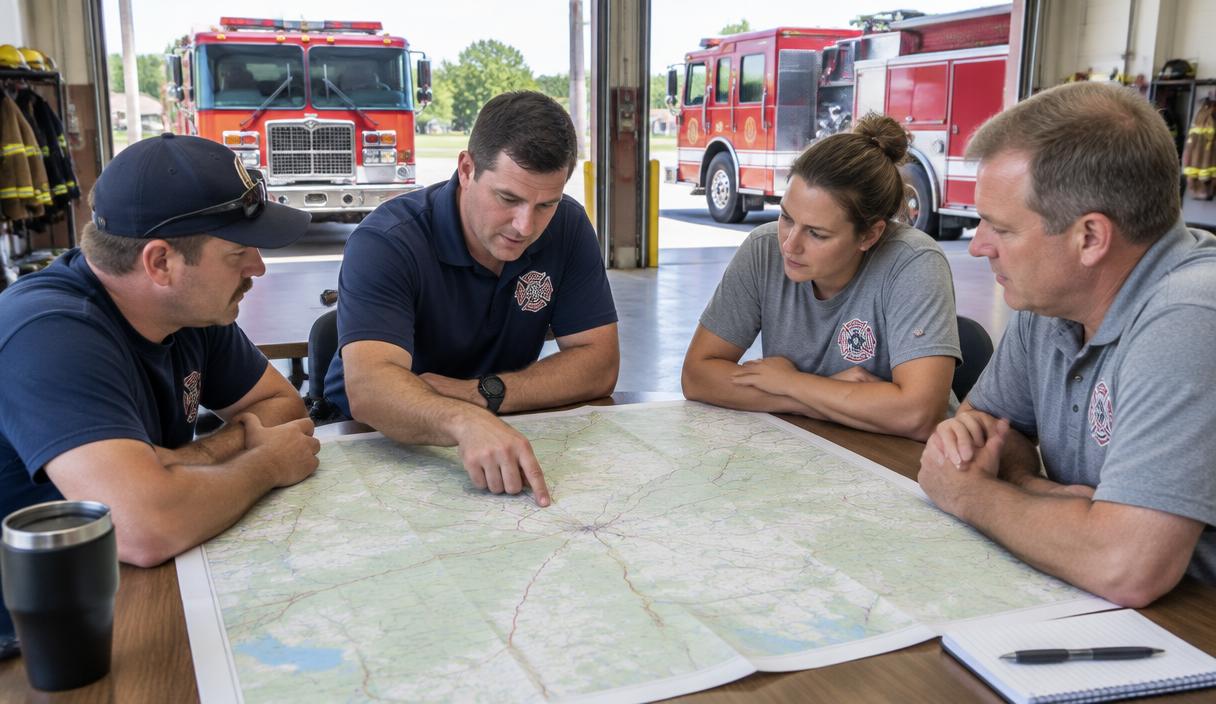
What the resident sees
Design it from the resident’s side first. They find one page, on the county’s site or linked from it. They fill in one short form. They either choose a company or are matched to the one that covers their address. They get a message straight away that says the application arrived, which company has it, and who will call. From then on, the company takes over, and the resident never needs to know how many offices were involved.
That last part matters. The fastest way to lose a volunteer is to make them work out the org chart.
Agree on a service standard
A shared front door only helps if something happens behind it. Agree on one promise that every participating company makes, such as a call to every applicant within a set number of days. The county’s job is to see the list and notice when someone has been waiting too long. The company’s job is still to interview, decide and train. A simple shared list with dates on it does more than any policy memo.
Money and paperwork
Settle who pays before the first company signs on. If the county pays, the companies are far more likely to join, and the county gets one invoice instead of a dozen reimbursement requests. Put it under one agreement that names the county as the customer and lists what each company controls. Ask your purchasing office early what it needs, because the answer is usually a written quote, tax paperwork and proof of insurance, and those take time to collect.
Write down who can see what. Many counties are comfortable seeing counts and waiting times while each company keeps its applicants’ details to itself. Whatever you choose, put it in the agreement so that no chief finds out later.
What chiefs will worry about
“The county will choose our members.” It will not. The interview and the vote stay with the company, and the agreement should say so in the first paragraph.
“This is more paperwork.” It should be less. The application arrives complete, the check is ordered in one place, and nobody retypes a form.
“Our process is different.” Most are. Each company should be set up with its own steps and requirements before it goes live.
“Who sees our records?” Only who the agreement says. Answer this one before it is asked.
Quick answers
Does every company have to join at once? No. Start with one or two that want it, run a full cycle, and add the rest one at a time.
Who decides who becomes a member? The volunteer company, exactly as it does today. The county shares the front door and the paperwork.
How long does a rollout take? It depends on the number of companies and how different their processes are. Plan for one complete recruiting cycle with the first companies before adding more.
Sources
More from The Size-Up