Buying software · 5 min read
What volunteer fire department software costs in 2026
Ross Shaffer and the Firehouse Desk team · November 2026

The short version
For a small volunteer department, published prices run from a few hundred dollars a year for a single-purpose app to roughly $1,200 to $1,800 a year for an all-in-one system. The price is the easy part to compare. The harder question is who runs the software after you buy it.
Published prices, by category
These are starting prices that vendors publish, checked in November 2026. The sources are listed below.
Paging and response apps. About $14 to $16 per device per year, or from about $349 a year for a whole department.
Inventory and inspections. About $999 a year for a department with up to five stations, with training records as a $399 add-on.
Scheduling. From about $1,200 a year, rising with users and modules.
All-in-one platforms. From $99 to $150 a month.
Recruiting. The National Volunteer Fire Council’s portal is free.
The larger vendors that serve career departments mostly sell by quote.
How vendors charge
Each one uses a different meter: incidents per year, devices, stations, users, or modules. Before you compare two prices, find out which meter each one uses and what happens to the bill when your department grows.
The costs that are not on the price page
Setup and training. Moving your old records in. Modules you assumed were included. Background checks and card processing fees, if the system handles applications. And the renewal price in year two.
Five questions to ask
Who hosts it, and who do we call when it breaks?
Who handles security and updates?
What is included, and what is an add-on?
Does the price change at renewal?
What happens to our data if we leave?
A volunteer officer should not become the department’s IT person. If the answer to the first two questions is “you do”, the low price is not the real price.
Where we fit
Firehouse Desk starts at $1,200 a year for one department. That covers recruiting, onboarding and membership, hosted and looked after by us. Background checks are billed per check, and add-ons are optional.
How to compare two quotes
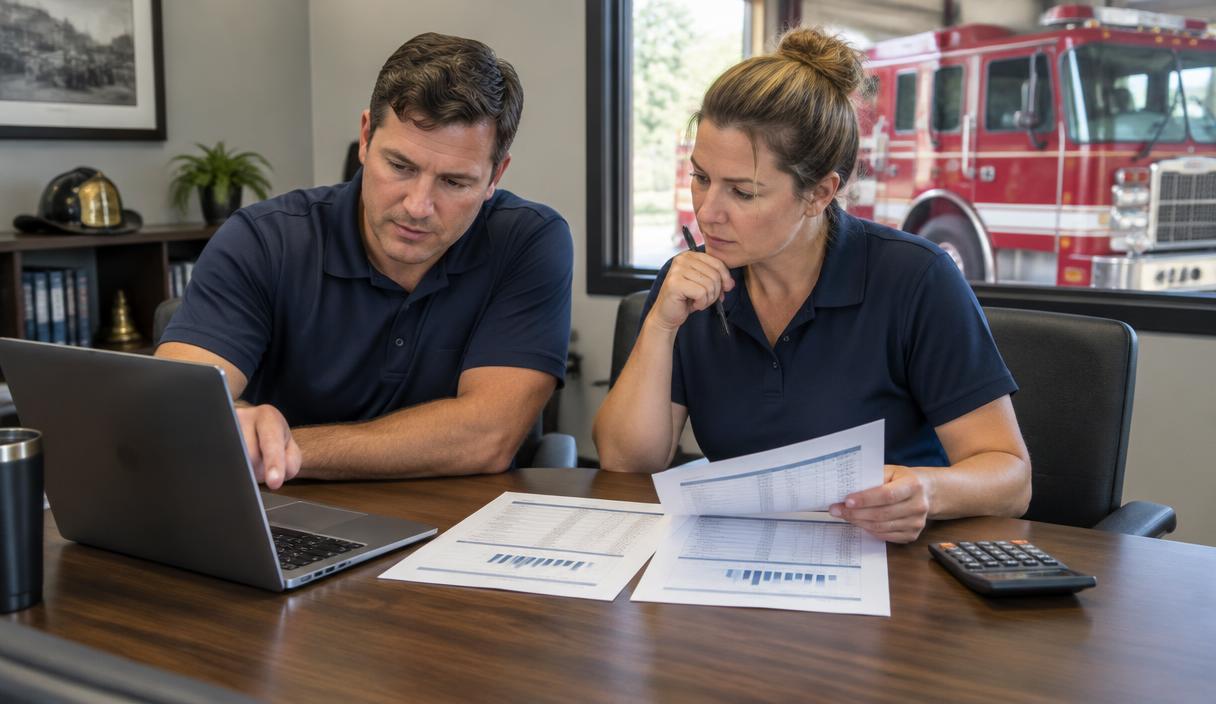
Put them side by side for year one and year two, not month one. Year one should include setup, training, moving your records and every module you expect to use. Year two should include the renewal price in writing. A product that looks cheaper by the month can cost more over two years once the add-ons are counted, and the reverse is just as common.
Then ask each vendor for a department your size that you can call. Ask that department one question: when something broke, how long did it take to reach a person?
Buying on a volunteer company’s calendar
Most volunteer companies set a budget once a year and vote on spending at a meeting. Ask for a written annual price early enough to get it into that budget, and ask whether a multi-year term changes it. If the county buys for several departments, ask for one agreement and find out what each department still decides for itself.
Start with the problem, not the product
Before looking at any vendor, write down the three jobs that cost your officers the most evenings. For one company it is chasing applications. For another it is the certification spreadsheet, or building the duty roster by group text every week. Buy for those three jobs. A system with twenty modules is not a bargain if you use four, because every unused screen is something a volunteer has to learn to ignore.
Ask the people who do the work. The officer who keeps the training records knows exactly where the hours go, and is rarely the person in the sales call.
One system or several
There are two ways to buy. You can pick the best tool for each job: one for paging, one for scheduling, one for training records. Each may be very good, and each has its own login and its own copy of your roster. When a member joins or leaves, someone updates three places, or more often forgets to.
Or you can run one system that holds the roster once and builds everything else on it. You give up some depth in each area, and you stop retyping names. For a small volunteer company, where the scarce thing is an officer’s free time, the second usually costs less in practice even when the price is higher. Whichever you choose, ask one question of every tool: where does the member list come from?
What your members will actually use
Software that only the secretary logs into is a filing cabinet. Ask how a member records hours or signs up for a shift, and try it on a phone. A fair test is five minutes: can a new member do the one thing you need from them without being trained? If the vendor offers a trial, run it with two or three of your own people, including the one who dislikes computers.
Who is behind it
You are also choosing the people. Ask how long the product has been in service and how many departments use it. Ask who answers the phone, and whether that person understands the fire service. Ask who is responsible for security, and what happens to your records if the company closes or you decide to leave. A vendor who answers those plainly is telling you how the next five years will go.
Quick answers
How much should a small volunteer department budget for software? Published starting prices run from a few hundred dollars a year for a single tool to about $1,200 to $1,800 a year for an all-in-one system. Add setup, add-ons and background checks if the system handles applications.
Is free software good enough? For recruiting alone, the National Volunteer Fire Council’s portal is free and a sensible place to start. It will not run your roster, hours or certifications.
Can a grant pay for it? FEMA’s recruitment and retention grants fund activities that bring in and keep volunteers. Ask your grant writer whether the software you have in mind fits the activity you are applying under.
Sources
More from The Size-Up